Coming to Japan can be an exciting and thrilling experience. Whether it is for the first time, or far from it. However, what is not spoken enough is how Japan handles wheelchairs. This article will help you to better understand how Japan views wheelchairs and how people in wheelchairs can see the sights of Japan in a stress free way. Whether it is seeing the bright lights of a city skyline to the tranquility of a garden, this article will break down everything someone needs to know while using a wheelchair in Japan.
Understanding Accessibility in Japan
Japan is known for having many walkables cities. With Tokyo ranking 6th in the world. But, that shouldn’t discourage wheelchair users coming to Japan. Many factors like post-WWII (mid-1940s), activism and early laws promoting disabilities awareness (1970s and 1980s) and barrier free accelerations (2000s) all help to promote and improve Japan’s accessibility to wheelchair users.
How Wheelchair-Friendly Is Japan Overall?
Even though Japan has come a long way with accessibility over the years, there are still things to be aware of. Major cities like Tokyo and Osaka have a lot of options with easy mobility. However, for those who want a more traditional Japanese vacation there might be more limiting options when being in a wheelchair. As older places like some shrines or neighborhoods were not designed with the thought of wheelchairs going through them. So finding elevators or ramps might be a challenge.
Another thing to note is the very narrow streets and sidewalks. Even in some parts of Tokyo, like the more residential areas or less populous areas, it is an extremely tight fit. For example, some doorways would not fit the size of the wheelchair. Along with narrow streets, sidewalks,and very steep hills.
It may look like Japan does nothing to help the disabled, but Japan has put the foot braille to help people navigate the streets and sidewalk. With indications when a street keeps going, or when a crosswalk or something different is happening. To learn more, check out this article on Japan’s “foot braille” on every sidewalk.
Even if the surface levels ofJapan seems like it does not cater to accessibility, this article will explain what you can do to make this a great vacation for everyone involved. If you have any questions about this article or know something specific, feel free to reach out to us at JewelTours Japan.
How do I use public transportation with a wheelchair in Japan?
Trains
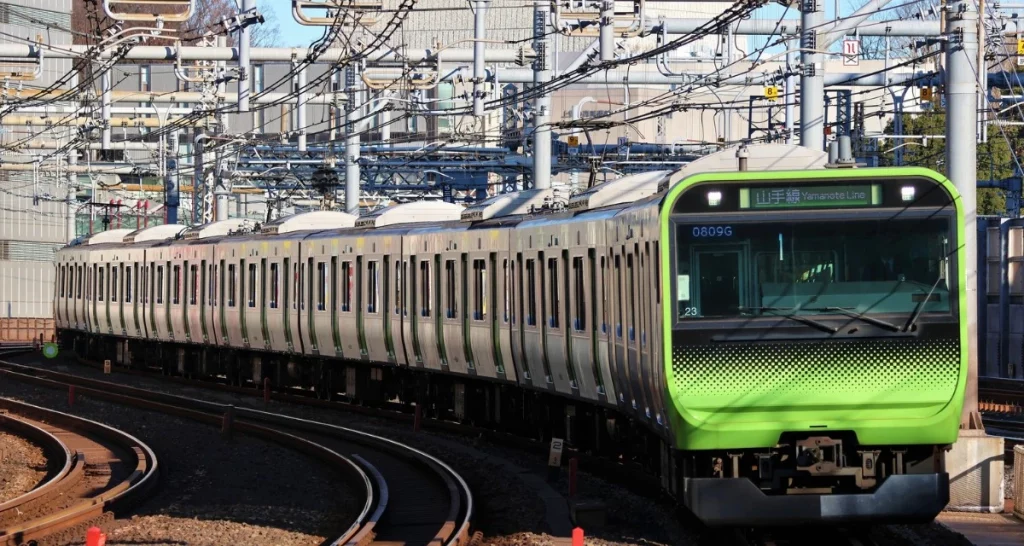
Japan’s public transportation is top notch. With many different options depending on where you want to go and what you want to see. The trains and buses all around Japan are a great way to see the local sights and attractions. Traveling with a wheelchair is very simple. Most huge stations have elevators for entrance and exit.
Once you get off the elevator into the station, there are a lot of signs for the specific train line you need. Follow the signs for your train line until you get to a ticket gate. Once you arrive, there is a station attendant window near the ticket gate. Ask the station attendant that you would like a ramp. The information you will need to provide is which stations you will get off at. Then, the station attendant will coordinate the rest.
Buses
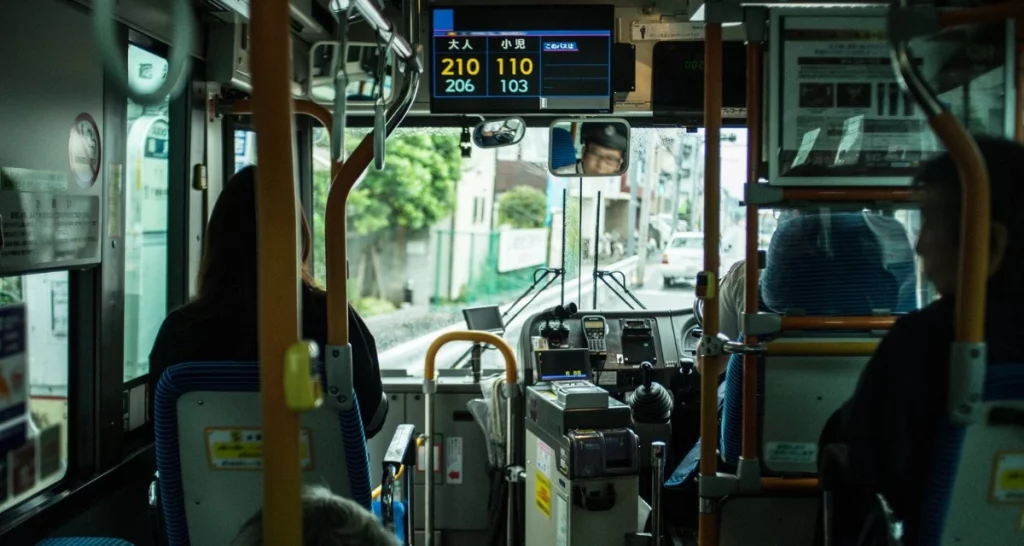
For the buses, it is even simpler. Just wait by the bus stop. Then when the bus arrives, the bus driver will see the wheelchair, get out of the bus, and extend a ramp to easily ride onto the bus. Not sure where you will be on the bus. The designated handicap seats can collapse, making a spot for the wheelchair.
Taxi
Taxis give a great alternative to the trains or buses if you do not want to deal with the crowd of people, if you are not near a station or bus stop, or if the destination you want to go is not convenient for trains or buses. To ride a taxi, it takes a little more planning. As not all taxis are equipped for a wheel chair. You must call ahead and order a wheelchair friendly taxi. There are a few things to consider.
- The narrow and crowded streets of Japan can make it difficult to effectively board a taxi in a wheelchair.
- Make sure that it is a wide open street with plenty of room to board.
- Make sure to get the exact measurements and confirm with the taxi that it will fit.
Keep in mind that the taxi driver may say no due to safety concerns and might suggest an alternative. In addition, finding a good taxi company can be difficult, Gotaxi is a common taxi app to help you find a taxi in Japan.
Shinkansen
The Shinkansen, aka bullet train, is a great way to get across Japan in a quick and easy way. However, it does take a bit of more complex planning than the other forms of transportation. For a more complete guide take a look at the Shinkansen website for all the details. If you are unsure about where the shinkansen goes, look at our article on routes for the Shinkansen bullet train in Japan.
Discounted tickets are possible to obtain. However, for visitors, most of the ticket prices are already at a discount. Depending on the documentation provided, it could have the potential to get rejected. However, it is always good to try and ask. You can also find more specific information depending on each individual site.
https://www.youtube.com/watch?v=BEA3YAo–eMAnother great way to travel by shinkansen is having QR code tickets. More stress free than having to worry about losing or handling paper tickers. Here is a video example from JR Central on how to use them.
Barrier free options for wheelchairs in Japan
Now that you know how to get around Japan, the next question is where you will stay, and what you can use. Japan offers a lot of accommodations. So finding just the right one can be difficult. Let’s get into it.
Let us define barrier free first and what it means in Japan. Barrier free in Japan means that designing environments, products, and services are accessible to everyone. Japan aims to target 4 major categories. Physical barrier, institutional barrier, information barrier, and consciousness barrier. Below is a table outlining what goals Japan has for each.
Four types of barriers and barrier-free efforts to eliminate them
| Barrier Type | Description of barriers | Main target audience to be affected | Barrier-free initiatives to eliminate | Major Related Laws, Regulations and Guidelines |
| Physical Barrier | Difficulty in movement or use due to the structure of the building or transportation system | Wheelchair users, elderly, visually impaired, etc. | (1) Physical Barrier-Free(ramps, elevators, non-step buses, Braille blocks, etc.) | ・Barrier-Free Access Act・the Building Standards Act |
| institutional barrier | Lack of laws and systems in place and difficulty in receiving social support | People with disabilities, elderly, caregivers, job seekers, etc. | (2) Institutional Barrier-Free(e.g., barrier-free laws, systems to promote employment of persons with disabilities, and mandatory provision of reasonable accommodation) | ・Act on the Elimination of Discrimination against Persons with Disabilities・Disability Employment Promotion Act |
| informational barrier | Difficulty in obtaining information due to visual, hearing, or other disabilities | Visually impaired, hearing impaired, elderly, etc. | (3) Informational barrier-free(voice guidance, sign language interpretation, subtitled broadcasts, web accessibility) | ・Act on the Elimination of Discrimination against Persons with Disabilities・JIS X 8341 (Web accessibility) |
| conscious barrier | Lack of understanding or prejudice in society causes restrictions in life and activities | People with disabilities, LGBTQ+, foreign nationals, elderly, mentally ill, etc. | (4) Conscious barrier-free(Diversity education, promotion of a symbiotic society, and universal design) | ・Universal Design Promotion Measures・SDG Goal 10: “End inequality among people and nations.” |
The goal is that everyone has the freedom to move around and not feel trapped. For a more in depth look at these four types of barriers, click the link.
Hotels
Now that we know what barrier free means in general, what does barrier free means specifically for hotels. According to the first major category, physical barrier, hotels will have step-free entrances, wider doorways and corridors, grab bars in bathroom and shower, lower washbasin, and multipurpose toilets. Modern hotels will also have designated rooms for wheelchair individuals.
When looking for a barrier free hotel and accommodation, keep an eye out on the hotel websites that have specific information on “barrier free” and “accessibility”. Look for certifications stickers, or contact the hotel to ask specifically what kind of accommodation they offer.
Knowing that some people might want a more traditional Japan experience, ryokans or traditional Japanese inns can offer that. However, it can be challenging to find a ryokan with wheelchair accessibility. Most ryokans are in a natural setting, hot springs towns or onsen towns, or rural places like the countryside. While there are ryokans in cities, they are usually like a time machine in history. Hidden away with a lot of trees and vegetation. Because of that, it would be very challenging with wheels to navigate. Another reason is because ryokan were built before accessibility laws. So things like wider entrances or elevators are virtually non-existent. Along with a traditional Japanese experience comes sleeping on tatami, traditional Japanese flooring, and having to use a communal bathroom.
Finding a ryokan with wheelchair accessibility means to look for barrier free accommodations. However, keep in mind that results might be limiting, and staying in a slightly more modern hotel might be the comfortablest and easiest option. However, it is possible, JewelTours Japan can help you find a ryokan that meets your requirements.
Renting Wheelchairs
For those who want to rent wheelchairs in Japan there are companies who provide that. A few are Ido Support, NGT Care Rental and WHILL are companies that can provide wheel chair rentals. Depending on your specific needs and time period. Major international airports like Haneda also have wheelchair support for outside of the airports. The key to renting wheelchairs is doing so in advance. Making reservations, giving details, and making payments. Here is a step by step look for renting wheelchairs.
Step 1 Plan and book in advance
Unlike some countries who have day of services, Japan is a country where you must make reservations in advance, or risk not having a service. While some companies have a minimum on when you can book, it is good to book as soon as you know the details of the trip, and check the companies website.
Step 2 Provide information
While the specific information might vary from company to company, the basic details are as follows.
- Type of equipment needed.
- Height and weight of the person using the wheel chair.
- Hotel name, address, and check in/check out dates.
- Any special request.
Step 3 Payment and delivery
- Rentals are usually paid in advance.
- Some companies offer hotel deliveries.
Step 4 Receive and return
- If the chosen company delivers, it will be delivered to the hotel and picked up from the same location.
Some things to look out for, some companies are cash only. So cash on delivery might be the only option. Deliveries might not be possible. So another person in the party might have to go and get the wheelchair in person, and return in person. In that case, payment will be made when the person first receives it. For a more in depth look at renting wheelchairs, check out this article.
Managing Luggage
Managing luggage with a wheelchair can add extra stress to a vacation. Sending luggage ahead can help reduce that stress. A very popular service is the Takkyubin delivery service. They do everything from shipping to handling. If you are unsure what service you need from Takkyubin, check out our article on it.
Another way to help manage luggage is the station coin lockers. Found in nearly every major and minor station, these are great if you are taking a day trip, or have essentials that are not needed right away. Using them is very easy and convenient. All you have to do is find the coin locker area. There are signs, and usually easy to find around the station. Choose the locker you want, pay using IC card or cash at the screen, take the receipt, and store.
There are some things to pay attention to. When you retrieve your items, you go back to the screen you paid at, press the locker you used (make sure you remember the number), and either use the same IC card you paid with, or use the QR or number code found on receipts (make sure to keep the receipt). Lockers are a first come first serve basis. So depending on the time of day, there might not be any lockers available. Getting to them early will ensure you have the first pick of the size of the locker you want.
There are also some practical strategies to make hands free mobility easier.
- Having a small crassbody bag with the essentials will make it easier to navigate with a wheelchair than a big clunky bag.
- Having a big bag with smaller bags inside can make organization easier. When using a coin locker, taking out the smaller bags from the big bags depending on what is needed can make managing the coin lockers easier.
- Having an extension on the wheelchair, like a cup holder, or basket. Just make sure that it does not interfere with other people walking next to you.
Accessible Tourism
Finding accessible paths in Japan with a wheelchair
Exploring Japan with a wheelchair does not have to be hard. There are many websites and resources available for a smooth trip. The trick is just knowing where to look. A great app is WheelLog. This app provided users with actual information from other users on where to find the best wheelchair friendly accommodations, attractions, and locations. It was founded by a wheelperson in Japan. So the main goal is for those with a wheelchair.
Another great resource is also Google Maps. With the filter ability when finding best routes, click on the wheelchair accessibly filter to find the routes with elevators and no stairs. Google Maps makes mistakes. However, it can help point you in the right direction. In addition to using the WheelLog app, finding the best routes could be a breeze.
While using the apps can be helpful, they sometimes do not show the presumed locations. So reading the signs in Japan is crucial, especially when trying to find elevators. As they might not be in the most convenient locations. Here are some tips.
- Looks for signs and symbols that say エレベーター (Erebētā) in stations or on the streets.
- You also ask the staff of stations or restaurants where the elevators are located. ” Erebētā wa doko desu ka?” (Where is the elevator?).
- Give yourself ample time to find the elevators.
- Plan extra time according to the activity being done.
Tourist Sites
With the help of WheelLog and Google Maps, finding places to go with a wheelchair is easy. The key is to plan in advance. If you find a place using an app, you can go to that specific attractions website, and see what accommodation it has to offer.
For the most part, places like museums, parks, shopping malls and gardens are a great place to start. As they usually have a ramp or an elevator to take people up. The best places around Tokyo to visit are listed.
- Sensoji Temple- A great place to immerse in Japanese culture, and buy souvenirs
- Meiji Jingu Shrine- A Shinto Shrine right in the heart of Shibuya
- Tokyo Skytree and Tokyo Tower- Exceptional bird eye view of Tokyo
- Odaiba- Great place to eat and explore, with a view of the Rainbow Bridge
- Shinjuku Gyoen– A look at the Edo Period
- Hama Rikyu- Tranquil escape right in the bustle of Tokyo
- Kiyosumi Garden– a great place to take a pleasant scroll
If this list looks daunting and you can decide on where you go, JewelTours Japan can help you tailor a vacation to all your travel needs.
Restaurants, Cafés & Shops
Even though apps can help you find restaurants, cafes, and shops that are wheelchair friendly, Japan’s restaurants and shops can be very small. Sometimes on spacious roads, there will be very narrow or tiny restaurants. So, here are a few points to watch out for when choosing where to go.
- When entering an establishment, it is important to note how narrow the doorway is. Even if there is a ramp or elevator, the width of the door may be challenging for a wheelchair to fit though. Especially if it is an electric one.
- Another point is that the restaurants or shops may not have that much space inside of them. So, having space for a wheelchair may be non-existent.
- The other thing is that during lunch or dinner rush, the restaurants get very crowded. So crowded that there are people waiting outside on the streets and/or inside the restaurants. If the restaurant itself is very small, then going around comfortably for a wheelchair might be challenging.
However, with the help of online resources, it can help have a smooth visit to any place. Just so that you can be prepared, here are a few common Japanese questions you can ask for a smooth visit.
| Japanese | Romanji | English |
| 入口に段差がありますか? | Irigu ni dansa ga arimasu ka? | Is there a step at the entrance?” |
| 近くにエレベーターはありますか? | Chikaku ni erebētā wa arimasu ka? | Is there an elevator nearby? |
| 車いすで入れますか? | Kurumaisu de hairemasu ka? | Can I enter with a wheelchair? |
| スロープ(またはランプ)はありますか? | Surōpu (mata wa ranpu) wa arimasu ka? | Is there a ramp? |
| バリアフリーのルートはありますか? | Bariafurī no rūto wa arimasu ka? | Is there an accessible route? |
Manual vs Electric Wheelchairs in Japan
When deciding on what kind of wheelchair to either bring or rent in Japan, there are a few things to think about. The size. The limit for elevators and trains is max 120cm (L/H) x 70cm (W). However, a lot of foreign wheelchairs exceed this. So if you are coming with your own wheelchair, take note of the size. Because if it is too big, more assistance will be required or getting a specialized van to move around Japan.
A manual wheelchair is better to maneuver the tight and crowded streets of Tokyo. However, it might be challenging for people who want to move around themselves, or can’t move around with their arms.
There are a few things to consider having to do with physical space, infrastructure and regulatory hurdles in Japan with an electric wheelchair.
- Narrow buildings, streets, entrances and crowded places make it difficult to move around efficiently.
- Older buildings are not accustomed to the weight of the electric wheelchair.
- Supported devices that are attached to the wheelchairs could make them not compliant with pavement rules.
- Japan uses a different voltage and plugs from America and Europe.
- Accessible and appropriately powered charging outlets in public places can be difficult to find.
- Hotels and stations that have a dedicated place to charge electric wheelchairs are not standard.
- International hotels often have accommodation for large electric wheelchairs. But, it is recommended to call ahead and check with each specific hotel.
All in all
Traveling in Japan with a wheelchair can be a hard task, but with the right information and planning, it can be a fun trip with everyone involved. Making sure to always call ahead of time to hotels and buy train tickets in advance will make the process much smoother, and will help everyone know what to expect.
Advice: Planning and researching is key. Because every place will have their own take on accessibility and what kind of accommodation they offer. Calling ahead of time to ask and tell the company what you need, will make for a stress free and fun trip to Japan.